Email Marketing for NZ Product Businesses: The Setup That Pays for Itself
Email Marketing for NZ Product Businesses: The Setup That Pays for Itself
By Gavin Hewitson, founder of In-box
Most product businesses I talk to in New Zealand know they should be doing email, but very few have it set up properly. Usually they have a list sitting in Shopify or Mailchimp, a newsletter that goes out when someone remembers to send it, and nothing happening automatically in between.
That's a shame, because email is the one channel you own. Meta could double your ad costs overnight and Google could change its search rules, but your email list remains yours. I run In-box, an email and SMS agency that has worked with more than 500 ecommerce brands, and the businesses that grow steadily almost always have the same simple email setup. Here it is, in the order I'd build it.
Step 1: Give people a real reason to join your list
A "Subscribe to our newsletter" box in the footer won't usually grow your list. Nobody wakes up wanting more newsletters. So, people join when there's something in it for them.
For a product business, that’s usually one of these:
A first-order offer, such as 10% off or free shipping.
Early access to new products or limited runs.
Something useful related to your products, like a sizing guide, a care guide or a recipe pack.
Show the offer in a pop-up after someone has spent a little time on your site. On product pages, show it in a smaller form. Ask for their email first. Then, if you plan to use SMS, ask for their phone number and consent to receive texts on a second step.
We cover the offers, timing and testing in greater detail in our guide to sign-up forms and list growth.
A good sign-up offer is what turns visitors into subscribers.
Step 2: Build the three automated email flows that do most of the work
Automated emails (we call them flows) go out on their own, based on the actions people take. Basic flows can take just a few hours to set up and run every day in the background. If you only build three, start with these:
1. The welcome series
This one starts the moment someone joins your list, when they're definitely interested. The first email delivers whatever you promised (a discount code, a guide). The next two or three tell your brand’s story, show your best-selling products and share a few customer reviews. For small brands, this can be the single most profitable email flow they’ll ever set up.
2. Abandoned cart and abandoned checkout
Plenty of people add something to their cart and end up getting distracted. Sending a reminder an hour or two later, followed by one more the next day, can bring a surprising number of them back. Keep your first reminder friendly and simple. Something like “Here's what you left behind and here's the link” works. Save any discount for the second or third email, if you use one at all.
3. Post-purchase
Once someone buys, thank them and tell them what to expect with their delivery, including when it should arrive. Once they’ve had some time to try the product, ask for a review. Then, you can point them to a product that goes well with what they bought. A good post-purchase flow gives customers a reason to keep buying, rather than leaving their next order to chance.
Once those three flows are running, add a win-back email for customers who haven't bought in a while. Our complete guide to email flows goes through every flow a store needs and the order to build them in. Here's how we build a win-back flow once you're ready for it.
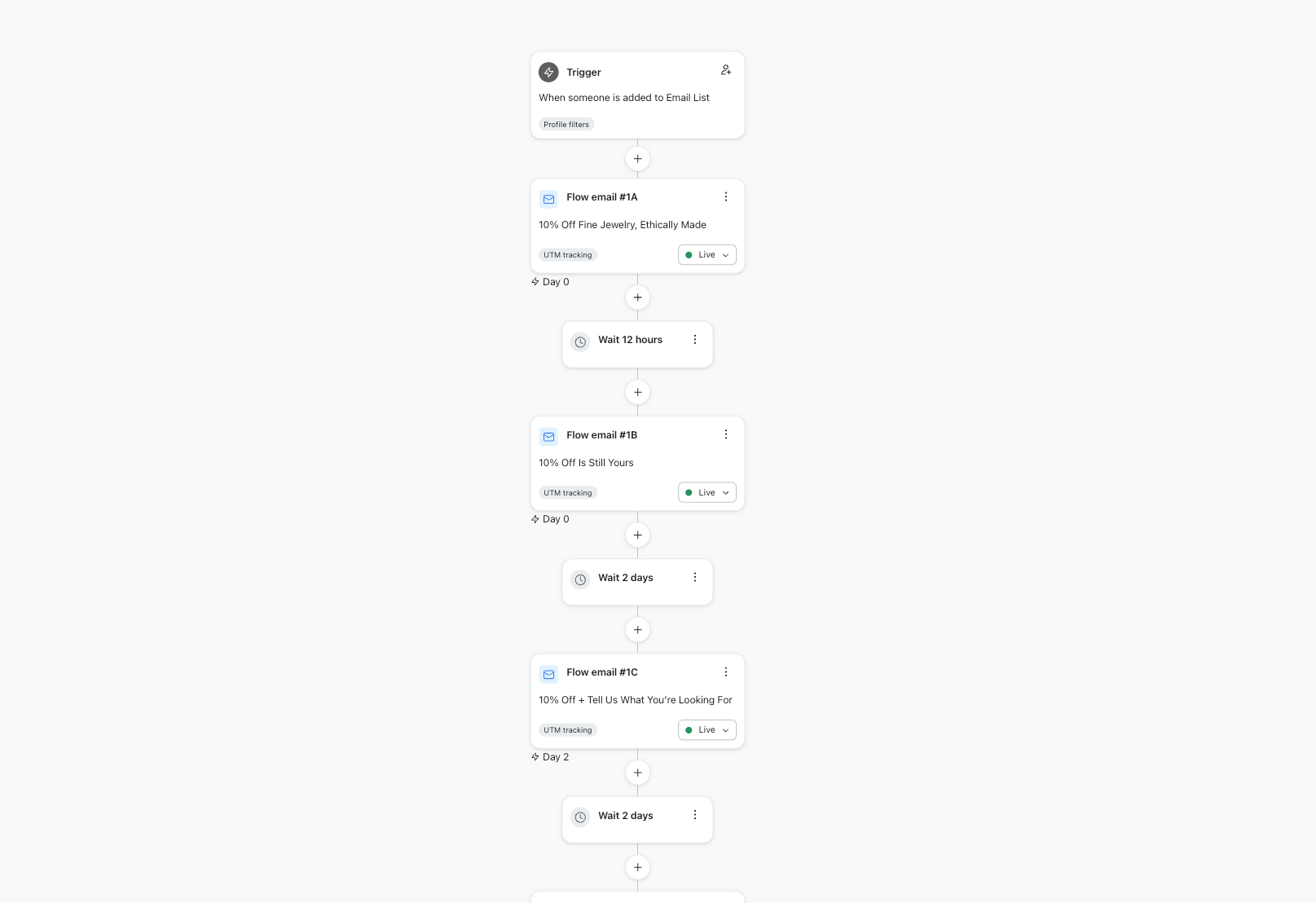
Automated emails (flows) send on their own, based on what each customer does.
Step 3: Send campaigns on a rhythm you can keep up
Campaigns are the one-off emails you send to your subscribers about a new product, a sale or a seasonal story. The biggest mistake I see is sending them in bursts. If you send three in one week and nothing for two months, your subscribers might forget who you are, which makes it harder to get them re-engaged.
Pick a rhythm you can stick to. For most small product businesses, one email per week is a good start. A simple monthly plan works well:
Week 1: a product spotlight or new arrival.
Week 2: something useful or a behind-the-scenes look (how it's made, how to use it, a customer story).
Week 3: social proof, such as reviews or user photos.
Week 4: an offer or a reason to buy now, if you have one.
Not every email needs a discount. If every send gives people 20% off, they learn to wait for a sale.
Step 4: Look after your list so your emails land in the inbox
A big list is only useful if your emails reach your subscribers. If you keep emailing people who never engage, Gmail and Outlook can start treating your emails as spam, including the ones you send to your repeat customers.
A couple of simple habits can help fix this. Start by sending your regular campaigns to people who have opened, clicked, or purchased in the last 90 days or so, rather than everyone.
Every few months, you should also check who’s gone quiet and send them one last "still interested?" email. If they haven’t engaged in a long time and still don’t respond, it’s time to stop emailing them regularly. Our email deliverability guide provides the full picture.
Step 5: Watch the numbers that matter
Open rates can be useful, but improving them is not the goal. Instead, check these three things each month:
How much revenue your automated emails brought in.
How much revenue your campaigns brought in.
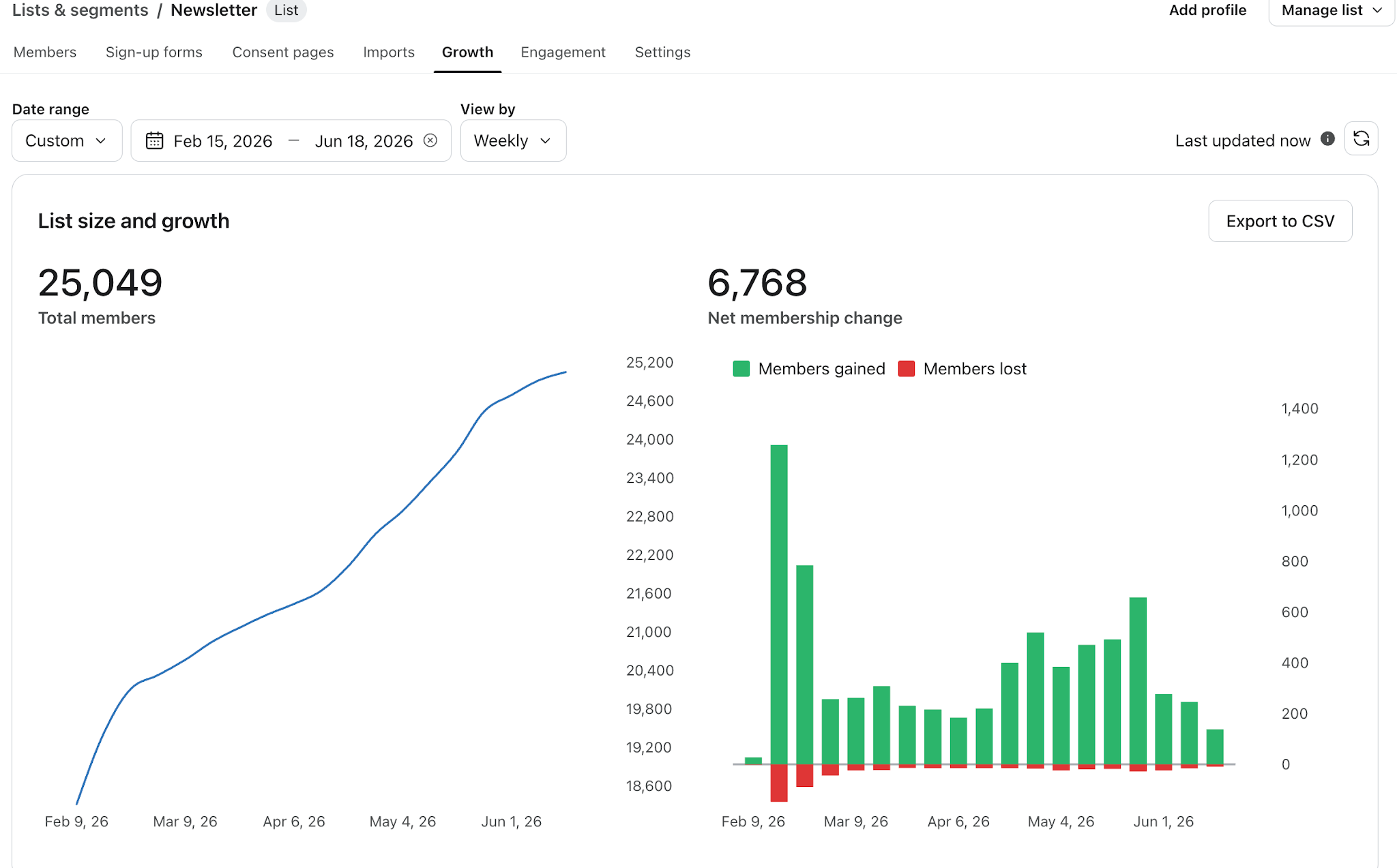
How fast your list is growing.
If your flows are bringing in revenue and your list is growing, that’s a good sign. If the numbers aren’t what you want them to be, your sign-up offer and welcome series are good places to start.
Where to start this week
You don’t have to try to do all of this at once. Set up a proper sign-up offer and a welcome series this week. Then add the abandoned cart emails next week and the post-purchase flow later on.
Within a month, you'll have a system that can bring in sales every day, even when you don’t have time to send a campaign.
Gavin Hewitson is the founder of In-box, an email and SMS marketing agency that has worked with more than 500 ecommerce brands.
